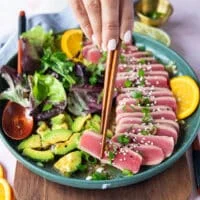
Tuna Tataki
This Tuna Tataki is a Japanese dish that you can make at home so easily. It's a wonderful combination of delicately seared tuna and a yuzu citrus ponzu sauce to dip in or drench it in. This tuna recipe is a great appetizer, a perfect bento box add on and a great way to satisfy your sushi cravings!
Ingredients
Tuna
- 2 Ahi Tuna steak Saku is best
- 1/4 teaspoon salt
Ponzu Sauce
- 1 teaspoon ginger grated
- 1 teaspoon garlic grated
- 1 Tablepsoon scallions minced
- 1 teaspoon lime juice
- 1 1/2 teaspoon orange juice
- 1/2 teaspoon garpefuit juice or use more orange
- 2 tablespoons soy sauce
- 1 tabelsoons brown sugar or white
- 1 teaspoon sesame oil
To serve
- 2 avocados sliced
- 1 cup greens
Instructions
-
Begin by salting you ahi tuna on both sides with sea salt.
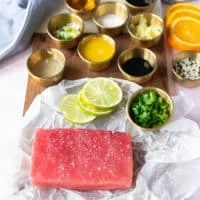
-
Use a neutral oil and a hot skillet, then add in the fish.
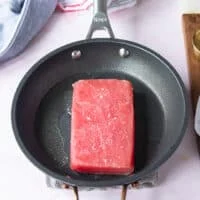
-
You want to sear it for less than a minute on each side so it develops a cooked crust but still is raw on the inside.
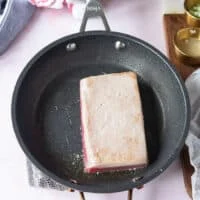
-
Remove the fish and let it cool.
-
In the meantime, prepare the sauce.
-
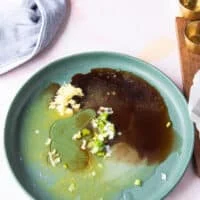
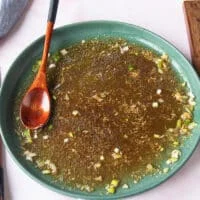
On the serving plate, add all the sauce ingredients together and mix well.
-
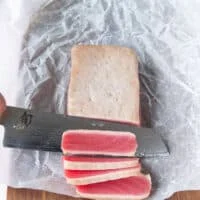
Take the slightly cooled tuna and slice in against the grain about 1/4 th of an inch thick slices.
-
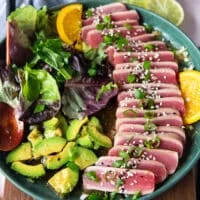
Arrange it over the sauce in the serving plate.
-
Serve it along some sliced avocado, some greens and garnish with sesame seeds.
-
The perfect appetizer plate!
Recipe Video
Recipe Notes
Tuna Tataki Recipe Tips
- Use quality Ahi Tuna, sushi grade. If you can find the saku block like we did here, it's highly recommended! We used it in our Tuna Carpaccio, Tuna Crudo and it's the best cut if you can find it.
- Yuzu is a Japanese citrus which blends orange, grapefruit and lemon all in one fruit. If you can't access fresh yuzu or fresh juice, then use a blend of those citruses to achieve the same taste. It's the citrus of choice for ponzu sauce.
- Make the ponzu sauce up to 1 day in advance and store it in the fridge in an air tight container.
- It's best to pour the sauce at the bottom of the serving plate or bowl and then arrange the fish right ontop. This helps the fish soak up some of that wonderful sauce.
- Feel free to add some spice to the sauce, we just used the classic ponzu style flavors.
- When cooking the tuna, always use a neutral oil with a high smoking point.
- Prehet the skillet really well before adding in the fish, it needs to sear real quick on high heat.
- Don't over cook the tuna! Undercook it if you should, but avoid overcooking.
- Depending on the thickness of your fish, usually less than a minute is enough per side of searing.
- The Tuna tatki once assembled, is best served within 2 hours.
- If you have leftovers, turn them into an Ahi Tuna Salad or a Sushi Bake or even Sushi Burrito.
Tuna Tataki Variations
- Sesame Crusted Tuna Tataki: Coat tuna in sesame seeds before searing similar to our Seared Ahi Tuna
- Spicy Tuna Tataki: Drizzle chili oil or serve with spicy ponzu.
- Garlic Soy Tuna Tataki: Add grated garlic to sauce.
- Citrus Tataki: Use yuzu, lime, and orange zest.
- Tataki Salad Bowl:Serve over greens with ponzu vinaigrette, or make it a bowl similar to our Sushi Bowl.
- Tuna Tataki with Avocado: Plate slices over avocado for richness.
How to Properly Sear Tuna?
Pat dry the tuna before searing it. Season it minimally using a dry spice. Then you'll need to have a preheated skillet with neutral tasting oil. Sear the fish for less than a minute per side. Avoid overcoking it. Let the tuna rest before slicing. Use a super sharp knife to easily slice the fish.
What type of tuna is best for tuna tataki?
- Ahi (yellowfin tuna) – most common, balanced flavor
- Bluefin tuna – richer, fattier, premium option
- Bigeye tuna – similar to bluefin, slightly leaner
The tuna should always be sashimi grade or sushi grade, meaning it’s safe to eat raw when properly handled.
Choosing the Right Tuna
Chose the options below and avoid previously frozen grocery tuna (unless labeled sushi grade). Also avoid dull colored fish, or any fish with a strong odor. Instead opt for bright ruby red color fish with a firm texture and fresh ocean smell.
Is tuna tataki safe to eat?
It's safe for most people when when made with sashimi grade tuna and handled correctly. These include buyig sushi grade tuna for a fishmonger and keeping it cold until cooking . Then searing right before cooking and serving it the same day.
Some people may still find it unsafe, depending on thei health condition and some medications. It's best to consult a professional if you're in doubt.
What does tuna tataki taste like?
Tuna tataki has a clean, delicate flavor with a lightly smoky, savory crust from searing. The texture is buttery, tender with a chewy center. It has bright acidic notes from citrus or vinega with umami depth from soy sauce or ponzu.
How is tuna tataki different from sashimi?
The key difference is heat or sear. Sashimi is completely raw, no cooking while Tataki has a lightly seared exterior, raw interior
Tataki also typically includes a sauce or marinade, while sashimi is often served plain with soy sauce and wasabi on the side. Maybe a Spicy Mayo.
How is tuna tataki different from seared tuna steak?
Tuna tataki is seared for just seconds, not minutes. It's usually sliced super thin and served with light acidic sauces. The Seared Ahi Tuna or Tuna Steak Recipe is cooked for a bit longer and sliced thicker. They can be served as a main dish, with a sauce or not, even made into a Ahi Tuna Salad and more!
Is tuna tataki healthy?
Yes! It's a nutrient dense dish high in lean protein and omega-3, while low in carbs.
Should tuna tataki be marinated?
Traditionally, tuna tataki is not heavily marinated before searing. Instead, the sauce is poured after searing so the tuna can infuse far more and better while keeping the texture intact.
Can tuna tataki be served cold?
Yes! You can even chill it in the fridge for 1 hour to enhance firmness and presentation while keeping the center raw.
What is the best cut thickness for tuna tataki?
For best results, start with a thick, even block of tuna and slice into ¼–½ inch pieces after searing.
Is tuna tataki gluten-free?
The tuna itself is naturally gluten-free. However, soy sauce and ponzu may contain wheat. Make sure you read the labels and select gluten free soy sauce and citrus sauces.
What are common mistakes when making tuna tataki at home?
Top mistakes that affect quality and should be avoided are:
- Overcooking the tuna
- Using non sashimi grade fish
- Pan not hot enough for searing
- Slicing before resting the tuna
- Overloading with sauce
How should tuna tataki be stored?
Tuna tataki is best eaten immediately. This optimal for freshness , taste and texture. If you must store it, then cover it in the fridge for maximum of 24 hours. Avoid freezing the tuna as it's not recommended.
Why is my tuna gray inside?
It was over seared.
Why didn’t I get a crust?
Pan wasn’t hot enough or tuna wasn’t dry.
Why is it watery when sliced?
Fish wasn’t patted dry.
Why does it taste bland?
Needs more acid or finishing salt.